The Five Fundamentals of Knowledge: Quran, Hadith, Language, History, Fiqh
日本語版はまだありません — 英語の原文を表示しています。
What Are the Five Fundamentals of Islamic Knowledge?#
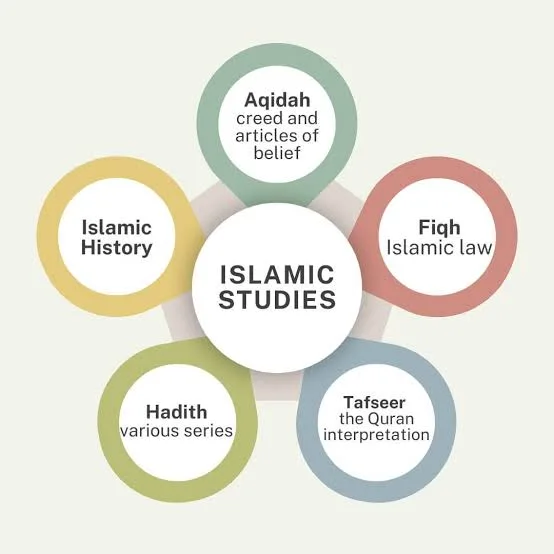
[Knowledge is one of the greatest blessings Allah gives a believer. It guides worship, strengthens faith, and helps us navigate the challenges of life with clarity and confidence.] Yet Islamic knowledge is vast. With so many subjects to study, it can be difficult to know where to begin. While not every Muslim needs to become a scholar, every Muslim benefits from building a strong foundation. Five core disciplines form that foundation: the Qur’an, Hadith, Arabic language, Islamic history, and fiqh. Together, they provide the understanding needed to learn, practise, and pass on Islam correctly.
وَمَا كَانَ الْمُؤْمِنُونَ لِيَنفِرُوا كَافَّةً فَلَوْلَا نَفَرَ مِن كُلِّ فِرْقَةٍ مِّنْهُمْ طَائِفَةٌ لِّيَتَفَقَّهُوا فِي الدِّينِ وَلِيُنذِرُوا قَوْمَهُمْ إِذَا رَجَعُوا إِلَيْهِمْ لَعَلَّهُمْ يَحْذَرُونَ
“So why does not a party from every group go forth so that they may acquire deep understanding of the religion, and so that they may warn their people when they return to them, so that they may beware?” [Surah At-Tawbah 9:122]
This verse is not addressed to scholars only. It is addressed to the Ummah. It carries within it an expectation: that from every community, some will go deep, learn, and then return to serve the people around them with what they have learned. The Prophet ﷺ said: “Seeking knowledge is an obligation upon every Muslim.” [Sunan Ibn Majah] That word ‘obligation’ is not a gentle suggestion. It is a directive. Knowledge of this deen is not a personal hobby. It is a responsibility, mission. The more we learn and share, the more the benefit spreads. Knowledge passed on to others can continue bringing reward long after we are gone. 1. Quran: The Foundation of Everything Every building begins with its foundation. In Islamic knowledge, that foundation is the Quran. The Qur’an is not only meant to be recited. It is meant to be understood, reflected upon, and acted upon. Allah asks: The word tadabbur appears in the Quran itself. It means to reflect deeply, to ponder, to turn something over in your mind until it yields its meaning. Allah asks us directly:
That question is a challenge. It implies that reflection is both possible and expected. Reciting the Qur’an is a great act of worship and brings immense reward. At the same time, the Qur’an was revealed to guide, teach, and transform our lives. That is why Muslims should strive not only to recite it regularly but also to understand its message. Reading the Qur’an without understanding still carries reward, but understanding its meanings helps us reflect on Allah’s words, strengthen our faith, and apply His guidance in our daily lives. A practical way to begin is by reading a reliable translation, learning common Qur’anic vocabulary, and taking one lesson from your daily recitation. Over time, your connection with the Qur’an will grow deeper. You can start your Quran understanding journey with our
2. Hadith: The Living Explanation of the Quran#
If the Quran is the message, the hadith is the explanation. The Prophet ﷺ did not only deliver the Quran. He lived it. Aisha (RA), when asked about his character, said simply: “His ﷺ character was the Quran.” [Sahih Muslim] He showed us how to pray, how to trade, how to grieve, how to forgive, how to lead, and how to follow. Without the Sunnah, the Quran remains partially unexplained. For this reason, hadith is an essential part of Islamic knowledge. The idea of “just follow the Qur’an” overlooks this reality. The Qur’an commands prayer, but the Sunnah explains how. It sets obligations, but Hadith clarifies their details. To preserve these teachings, scholars developed the science of isnad, carefully verifying chains of narration back to the Prophet ﷺ. This became one of the most rigorous preservation methods in intellectual history. If you’re not a scholar, you should start with an easy to understand hadith book. Start with accessible collections like Forty Hadith of Imam Nawawi and Riyadh as-Saliheen, using reliable translations and trusted scholars or authentic